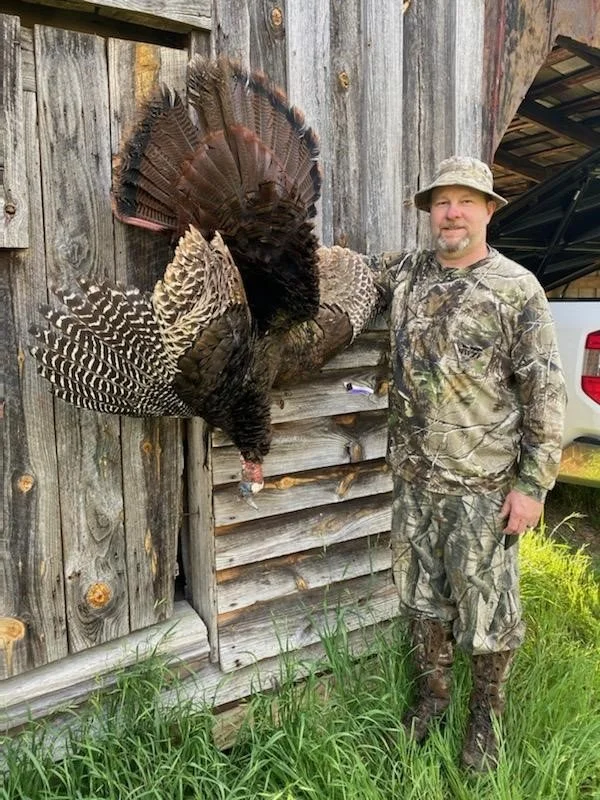
My first mornings in the turkey woods began before dawn, when the air still held last night’s cool and the world felt like it was waiting to decide whether it would let me in. I learned to read the land — where the gobblers liked to strut, which ridges funneled sound, where the roost trees shed birds like odd fruit at first light. I learned patience, how to move quietly over leaves and roots, how to sit and listen until a single feathered vibration of interest tightened my chest. Those hours shaped me: the stillness, the sudden rush when a tom answered back, the small, careful adjustments that turned a whisper into a commitment.
Making calls grew out of that same apprenticeship. At first it was practical — a store-bought slate for yelps, a diaphragm for soft clucks — but the more I hunted, the more I realized the nuance a turkey responds to isn’t made of plastic and mass production. It’s made of timing, of pitch, of the breath you put into it, and of a tone that says “I know this place.” If you can mimic the hesitation of a hen that’s just moved, the tiredness of a long-lost jake, the confident cluck of a settled bird, you have a conversation instead of an imitation.
So I started crafting my own calls. It wasn’t an overnight leap; it was the same slow learning curve as stalking a tom. I took apart cheap calls to see what made the sound; I experimented with different woods and slate, with chamber sizes and notches, trying to bottle the exact rasp that had put birds in range. refined. Some designs failed spectacularly. Others surprised me, giving a sound so honest that I felt the woods answering with the same gratitude you get from a successful hunt.
The real turning point came when I realized call making extended hunting beyond any single season. A handcrafted pot call that responds to a feather touch resurrects a memory from an early dawn. Those tools become extensions of your instincts, and making them sharpened mine. I became more observant in the field because I wanted to make better calls; I became a better caller because I understood exactly how my pieces would perform.
There’s also a deeper satisfaction in creating something that directly affects the outcome of a hunt. When a bird steps into range because of a call I shaped by hand, it’s a loop closed: observation to creation to result. That feedback taught me humility and ingenuity. It encouraged me to blend traditional craftsmanship with practical hunting knowledge — to honor the art of calling while treating each design as a solution to a problem I’d encountered in the woods.
Now, call making is more than a hobby; it’s my way of sharing what the woods taught me. Each call I produce carries lessons learned from kneeling in frost, from the soft click of a hen’s beak, from the sudden stillness after a gobble. They’re built for function first, but they’re also built to connect: to help another hunter feel that same flutter when a distant yelp turns into a bird at their feet. My passion for turkey hunting didn’t just lead me to call making — it fueled a commitment to crafting tools that keep the tradition honest, responsive, and alive.